
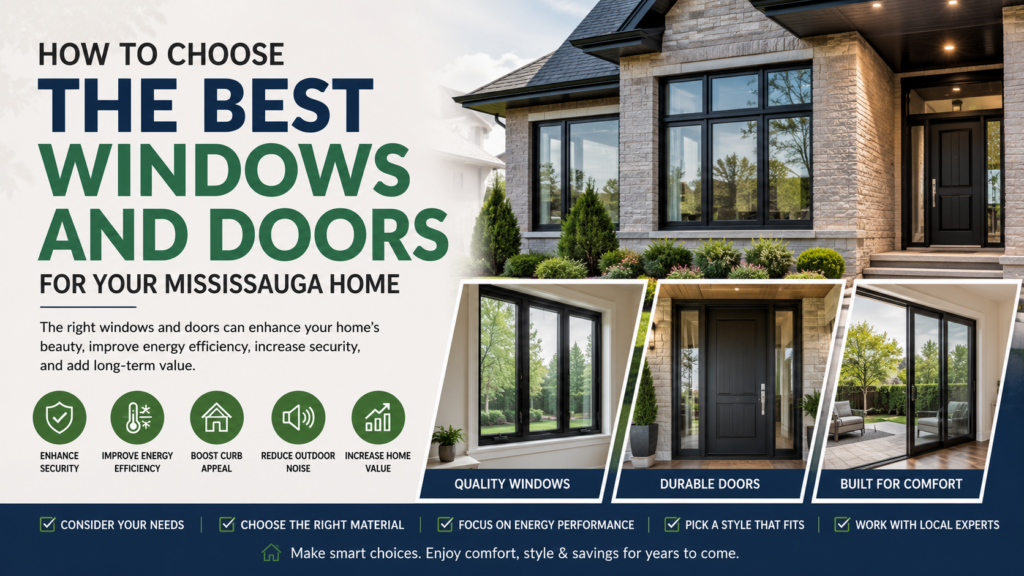
Replacing windows and doors isn’t the flashiest home improvement — but it’s one of the smartest. The right products reduce your heating bills, make your home quieter, improve security, boost curb appeal, and add real resale value. Get it wrong, and you’re dealing with drafts, condensation, and premature failures within a few years.
What makes this decision genuinely challenging in Mississauga is our climate. Winters regularly hit -15°C or colder. Summers bring humidity and intense UV. And the freeze-thaw cycles that repeat 30 to 50 times each season put relentless mechanical stress on every seal, frame, and hinge in your home. Choosing the best windows and doors for your Mississauga home means choosing products built for these conditions specifically — not generic North American products marketed to a broad audience.
This guide walks you through every decision: window types, frame materials, glass packages, door options, security, colours, installation, and budgeting. Let’s get into it.
Why This Investment Pays Off
Quality windows and doors deliver across every dimension of home performance. Lower energy bills come from sealed frames and insulating glass that stop the heat loss your furnace currently compensates for month after month. Better indoor comfort eliminates cold spots near walls and windows that make rooms feel chilly even with the heat running. Improved security comes from multi-point locking systems and reinforced frames that far outperform the single-point locks on aging doors. Noise reduction is immediate and dramatic for homes near the QEW, Hurontario Street, or the 403. Increased property value follows — Mississauga buyers notice and pay a premium for updated windows and a quality front door.
Older windows and doors are silent money-drains. Failed gas fills between panes, cracked weatherstripping, and frames that have shifted out of square over decades all allow conditioned air to escape continuously. Replacing them isn’t just a comfort upgrade — it’s a long-term financial one.
Mississauga’s Climate Demands Specific Products
This step is where most homeowners go wrong — skipping climate consideration entirely and buying based on appearance or price alone.
Cold winters create massive pressure on seals and frames. Products not rated for Ontario conditions lose their integrity within a few years — you’ll see it as fogging between panes you can’t wipe away, and drafts that weren’t there at installation. Hot, humid summers accelerate wood rot and warp untreated door panels, while UV exposure fades finishes and degrades seals. Rain, snow, and wind demand water-tight seals and weather-resistant materials throughout. And freeze-thaw cycles are the real enemy — that constant expansion and contraction opens micro-gaps in seals and causes frames to rack slightly out of square over time. Frame material selection matters enormously here. Vinyl and fiberglass handle cycling far better than aluminum or untreated wood, which is exactly why they dominate the Ontario replacement market.
Signs It’s Time to Replace
Window warning signs: fogging or condensation between the panes (the sealed unit has failed and can’t be repaired), noticeable drafts near the frame, difficulty opening or closing, rotting or cracked frames, water staining on the sill, and energy bills that keep climbing without explanation.
Door warning signs: visible daylight around the frame when closed, a door that swells in summer and rattles in winter, a loose or stiff lock mechanism, moisture damage at the threshold, rust around hinges, and cold radiating through the panel itself on a winter morning.
Minor weatherstripping replacement can sometimes extend a window’s useful life. But when frames are structurally compromised, multiple seals have failed, or a door has warped — full window replacement in Mississauga delivers decades of reliable performance that repairs simply can’t match.
Choosing the Right Window Type
Casement windows hinge on one side and crank outward. Wind pressure pushes the sash harder against the seal — making them one of the tightest-sealing styles available and an excellent choice for Ontario winters. Easy to clean from inside, too. Double hung windows let both sashes slide independently, offering flexible ventilation and a classic appearance that suits both older Mississauga homes and new builds. Sliding windows work well where the opening is wide rather than tall — above kitchen counters or in finished basements. Awning windows hinge at the top and can stay cracked open even during light rain, making them useful in basements and bathrooms. Bay and bow windows project outward, flood rooms with light, and dramatically improve curb appeal — a premium choice for living rooms in Port Credit or Lakeview homes. Picture windows are fixed, offer unobstructed views and maximum daylight, and deliver excellent thermal performance since there’s no operable hardware to seal around.
Browse the full range of windows available in Mississauga to see which styles suit your home.
Window Frame Materials Compared
- Vinyl is the dominant choice in Ontario for good reason — it doesn’t rust, rot, or need painting, handles freeze-thaw cycles reliably, insulates better than aluminum, and costs less than fiberglass. For most homeowners doing a window installation in Mississauga, quality vinyl is the practical sweet spot between performance and value.
- Fiberglass is more dimensionally stable than vinyl — it expands and contracts less through temperature swings, which means seals last longer. It also accepts paint well. The tradeoff is cost: roughly 20 to 40 percent more than equivalent vinyl. Worth it for large statement windows or premium custom builds.
- Wood has genuine warmth and insulates naturally, but demands regular painting or staining every few years in Ontario conditions. Without consistent maintenance, it deteriorates fast. Best suited to heritage homes where the aesthetic is non-negotiable and the owner genuinely commits to upkeep.
- Aluminum is strong and slim, but conducts cold readily — poor thermal performance without a built-in thermal break makes it a poor choice for most Mississauga residential applications.
- The recommendation: quality vinyl for the majority of homeowners. Upgrade to fiberglass for large or premium installations. Avoid aluminum for primary residential windows in this climate.
Double-Pane vs. Triple-Pane Glass
- Double-pane glass uses two layers with a sealed argon-filled cavity between them — a massive improvement over the single-pane glass still found in older Mississauga homes, and fully adequate for many applications.
- Triple-pane glass adds a third layer and second gas-filled cavity. The result is better thermal performance, warmer interior glass surfaces in extreme cold, and noticeably better noise reduction. Triple-pane windows in Ontario typically cost 20 to 30 percent more than equivalent double-pane, and in Mississauga’s heating-dominated climate, that premium pays back faster than it would in a milder region.
- Which to choose: For rooms near the QEW, Highway 403, or any busy road — triple-pane is worth it. For quieter exposures on a tighter budget, quality double-pane with Low-E coating performs excellently.
Energy Efficiency Ratings — Explained Simply
- ENERGY STAR Certification: Look specifically for the Northern Canada zone — the most demanding tier and the right standard for Mississauga winters. Don’t accept milder-zone certification as equivalent.
- U-Factor: Measures heat loss through the whole window. Lower is better. Target 1.22 W/m²K or below for Ontario.
- Solar Heat Gain Coefficient (SHGC): How much solar heat enters through the glass. Higher SHGC on south-facing windows helps in winter; lower on west-facing windows prevents summer overheating.
- Low-E Glass: An invisible metallic coating that reflects heat back inside in winter and blocks it in summer — standard in most quality replacement windows and one of the most cost-effective upgrades available.
- Argon/Krypton Gas Fills: Denser than air, these gases slow heat transfer between panes. Argon is standard and effective; krypton offers marginally better performance in narrower triple-pane cavities.
Choosing the Right Entry Door
Your front door handles more mechanical stress than any other element of your home’s envelope — opened and closed hundreds of times per year while facing direct weather and serving as your primary security point. When evaluating entry doors in Mississauga, work through priorities in this order: security first, then insulation, then aesthetics.
Steel doors offer excellent security and lower upfront cost. Foam-filled cores provide decent insulation. The downside is susceptibility to denting and surface rust if the coating is damaged. Fiberglass doors are the all-around winner for Ontario weather — they don’t rust or warp, insulate better than steel, and can convincingly replicate wood grain. A quality fiberglass door installation realistically lasts 30+ years with minimal maintenance. Wood doors are beautiful and insulate well naturally, but require refinishing every few years. Neglect that in Ontario’s climate and premature failure follows.
The verdict: fiberglass for most Mississauga homeowners. Steel when budget is the primary constraint and security is the priority. Wood only when appearance is paramount and upkeep is genuinely committed to.
Patio Door Options
Sliding patio doors are the most common choice — no swing clearance required, large glass panels, simple operation, and strong energy performance in modern units. French patio doors swing open fully and suit homes where the indoor-outdoor connection is a design feature. They offer excellent ventilation and a traditional appearance. Folding patio doors stack accordion-style to one side and essentially open the wall between inside and out — a premium, transformative option for luxury renovations with large outdoor entertaining spaces, at a correspondingly premium price.
Security Features Worth Paying For
Multi-point locking systems engage the door frame at three to five points simultaneously — far more resistant to forced entry than standard single-bolt deadbolts. Reinforced jambs in steel or composite resist kick-in attempts that hollow wood jambs cannot. Laminated security glass holds together when broken, making it resistant to being used as an entry point. Tempered glass shatters into small, less dangerous pieces — required by code in many door applications. Smart locks add keypad or phone-based access control without compromising structural security. Non-removable hinge pins on exterior-opening doors prevent removal even if the hinge is accessible from outside.
Colours, Finishes, and Style Matching
Black frames have dominated Ontario design trends for several years and remain strong — they suit modern, traditional, and craftsman homes when specified well. White frames are timeless and the safest resale choice. Woodgrain fiberglass finishes deliver the warmth of real wood without the maintenance. Matte black hardware complements dark frames and contemporary aesthetics. Satin nickel is the most versatile hardware finish across traditional and transitional styles.
For home style matching: modern homes suit narrow dark frames with minimal grilles; traditional homes call for double hung windows with colonial grilles and white or cream frames; craftsman homes work well with woodgrain fiberglass and prairie-style grilles; colonial homes suit symmetrical double hung layouts with raised-panel entry doors and sidelights.
Why Professional Installation Is Non-Negotiable
The best window on the market performs badly when installed incorrectly. Most window-related warranty claims trace back to installation errors — not product failure.
Improper installation creates air leakage that bypasses all the thermal engineering in the glass unit. Water infiltration from improperly flashed frames causes hidden rot that goes unnoticed for years. Voided warranties follow DIY or unlicensed installation — manufacturers require certified installation for coverage to remain valid. A professional window installation in Mississauga includes rough opening inspection, continuous sill flashing, level shimming, full cavity insulation, proper interior and exterior finishing, and a function test of every component before leaving.
Before hiring anyone, ask: Are you licensed and insured? How long have you operated in Mississauga? Do you provide written itemized estimates? What are your product and labour warranties? Can I see completed projects? A company that answers every question clearly is worth hiring. Browse completed portfolio work here to see what finished results should look like.
Budgeting and Financing
Pricing varies by material, style, glass package, hardware, and installation complexity. The core principle: the lowest quote is rarely the best value. A bargain installation that cuts corners on flashing, shimming, or insulation creates problems that don’t surface until water damage is already expensive. Factor in total cost over ten years — not just the sticker price.
Most reputable companies offer monthly financing plans. Check current specials for seasonal promotions and ask about manufacturer rebates. Government energy-efficiency programs have historically supported ENERGY STAR certified replacements — verify current availability when you’re shopping. In many Mississauga homes, properly specified replacements pay back their cost in energy savings within 8 to 12 years.
Common Mistakes to Avoid
Buying purely on price. Ignoring energy ratings and assuming products look equivalent when they’re not. Choosing appearance over thermal performance. DIY installation on anything beyond the most basic swap. Hiring an inexperienced crew to save money on labour. And overlooking warranty terms — installation by uncertified parties often voids the coverage you paid for.
Maintenance That Extends Lifespan
- Windows: Clean tracks and drainage channels twice per year. Lubricate hinges, cranks, and sliders annually with silicone spray. Inspect weather seals each autumn and replace any sections that compress flat.
- Doors: Check hinge screws yearly — loose hinges cause uneven wear. Lubricate lock cylinders annually. Replace weather-stripping when it no longer springs back. Maintain painted or stained finishes before deterioration reaches bare substrate.
A seasonal inspection across all windows and doors takes under an hour and catches small issues before they become expensive ones.
Frequently Asked Questions
How long do replacement windows last?
Quality vinyl installed correctly performs well for 25 to 40 years in Ontario conditions.
Are triple-pane windows worth it in Mississauga?
Yes — particularly for north-facing rooms, main living areas, and homes near busy roads.
Which front door material is best for Ontario weather?
Fiberglass — it handles freeze-thaw cycles, doesn’t rust or warp, and requires minimal maintenance. See door replacement options here.
Can replacing windows lower energy bills?
Yes. Homes with substantially degraded windows can see heating cost reductions of 15 to 20 percent after replacement with ENERGY STAR certified products.
What warranty should I expect?
A lifetime warranty on frame and sealed glass unit, plus a separate written labour warranty covering installation. Review full warranty details here.
What’s the best time of year to replace?
Spring and fall are ideal, though quality companies install year-round in Mississauga.
Final Thoughts
Every decision in this guide comes back to the same principle: choose products built for Mississauga’s specific climate, prioritize performance alongside aesthetics, and invest in professional installation that makes those products deliver what they’re capable of.
Advance Windows serves homeowners across Mississauga and the wider GTA — including Oakville, Toronto, Richmond Hill, Brampton, and Hamilton — with climate-appropriate products and consistent installation standards throughout the region.
Ready to start? Contact us for a free consultation, or explore our project portfolio to see what’s possible for your home.