
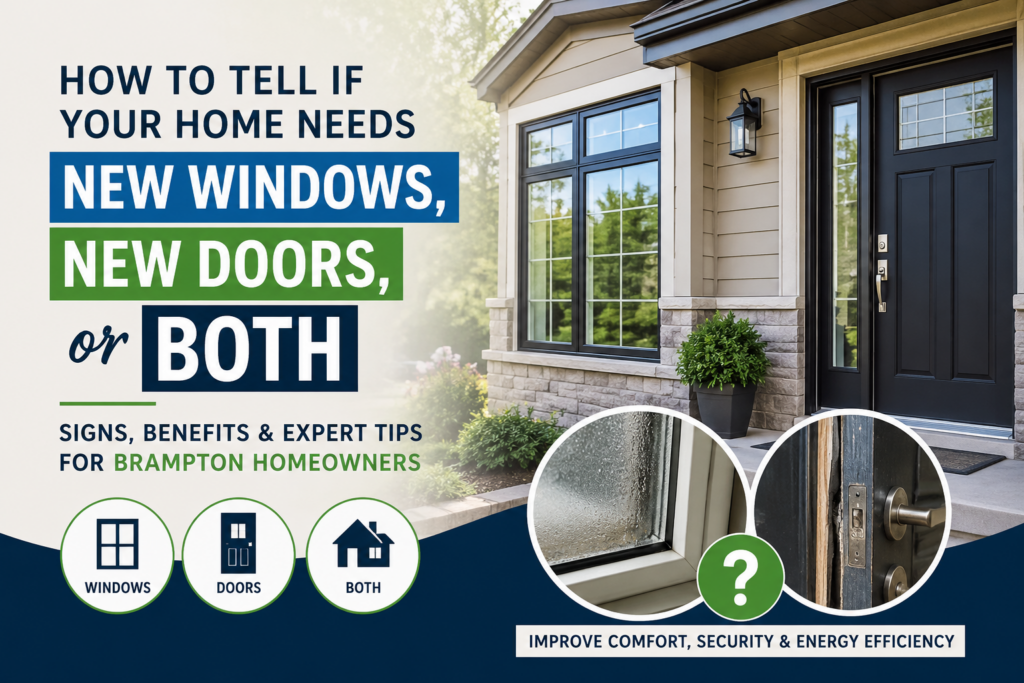
As a homeowner in Brampton, it’s easy to overlook your windows and doors until something starts going wrong. Maybe your heating bills have climbed higher than usual, you feel a draft near the living room window, or your front door doesn’t close as smoothly as it once did. These issues may seem minor at first, but they can be early signs that your home’s windows, doors, or both are no longer performing as they should.
Brampton’s climate can be tough on homes. Between freezing winters, humid summers, strong winds, and seasonal temperature swings, windows and doors are constantly exposed to changing conditions. Over time, this wear and tear can affect energy efficiency, comfort, security, and even your home’s value.
The big question is: how do you know whether you need new windows, new doors, or both? Understanding the warning signs can help you make the right decision before small problems turn into expensive repairs.
Why Windows and Doors Play a Critical Role in Your Home
Many homeowners think of windows and doors as simple design features, but they do much more than improve appearance.
Your windows help regulate indoor temperatures, allow natural light into your home, reduce outside noise, and improve ventilation. Your doors provide security, insulation, and protection from the elements while contributing significantly to curb appeal.
Together, they create a protective barrier around your home. When either one begins to fail, you may notice reduced comfort, higher utility costs, and increased maintenance issues.
Signs Your Home Needs New Windows
You Feel Drafts Near Closed Windows
One of the most common signs of aging windows is noticeable drafts.
If you can feel cold air entering your home during a Brampton winter, even when the windows are fully closed, the seals may have deteriorated. In summer, warm air can seep inside, making it harder to keep your home cool.
Drafty windows force your heating and cooling systems to work harder, leading to increased energy bills.
Your Energy Bills Keep Rising
While utility costs naturally fluctuate, consistently rising energy bills can indicate poor window performance.
Older windows often allow heat to escape during winter and enter during summer. If your HVAC system seems to run constantly, your windows may be contributing to energy loss.
Many homeowners who invest in window replacement in Brampton notice improved efficiency and lower monthly energy costs.
Condensation Between Glass Panes
Seeing fog or moisture trapped between glass panes is never a good sign.
This usually indicates that the window seal has failed. Once the seal breaks, the insulating gas between the panes escapes, reducing the window’s ability to regulate temperature effectively.
Unfortunately, this problem cannot usually be fixed with simple cleaning or maintenance.
Difficulty Opening or Closing Windows
Windows should operate smoothly and securely.
If they stick, jam, refuse to stay open, or require excessive force, there may be frame damage, warping, or hardware failure. These issues often become more common as windows age.
Increased Outside Noise
Have you noticed traffic, construction, or neighbourhood sounds becoming more noticeable inside your home?
Older windows provide less sound insulation than modern energy-efficient options. New windows can significantly reduce outside noise, creating a quieter and more comfortable living environment.
Visible Damage
Obvious signs of deterioration should never be ignored.
Look for:
- Cracked glass
- Rotting wood frames
- Warped vinyl
- Water stains
- Peeling finishes
Visible damage often signals deeper performance issues that affect efficiency and comfort.
The Complete Homeowner’s Guide to Replacing Windows and Doors
Signs Your Home Needs New Doors
Drafts Around Your Entry Door
Just like windows, doors can develop air leaks over time.
If you feel cold air entering around your front door, patio door, or side entrance, worn weatherstripping or structural deterioration may be the cause.
Even small gaps can significantly impact energy efficiency.
Your Door Is Difficult to Open or Close
A properly functioning door should open and close without resistance.
If your door sticks, drags along the floor, or no longer aligns properly with the frame, it may have warped due to moisture exposure or age.
Ignoring these issues often leads to larger problems down the road.
Security Is Becoming a Concern
Older doors may not offer the level of protection modern homeowners expect.
Signs that your door may need replacement include:
- Weak locking systems
- Loose hinges
- Damaged frames
- Visible wear around lock mechanisms
Modern entry doors provide stronger materials and advanced locking systems that improve home security.
Water Is Entering Around the Door
Water intrusion is never something homeowners should ignore.
Moisture around the door frame can lead to:
- Mold growth
- Rotting materials
- Structural damage
- Indoor air quality issues
If water consistently enters during storms, replacement may be the most practical solution.
Your Door Looks Worn Out
Your front door is one of the first things people notice about your home.
Faded paint, dents, rust, cracks, and outdated designs can negatively impact curb appeal. Replacing an aging entry door is one of the quickest ways to refresh your home’s appearance.
Signs You May Need Both New Windows and Doors
Sometimes the problem isn’t isolated to one area.
Your Home Is More Than 15–20 Years Old
If your windows and doors were installed around the same time, they often begin showing signs of wear within a similar timeframe.
Many Brampton homes built decades ago still have original components that no longer meet modern efficiency standards.
Drafts Are Present Throughout the Home
If you feel drafts in multiple rooms and near several entry points, it’s possible both your windows and doors are contributing to energy loss.
This is especially common in older homes where seals, frames, and insulation have deteriorated over time.
Indoor Comfort Is Inconsistent
Do some rooms feel colder than others in winter? Are certain areas difficult to cool during summer?
When both windows and doors are underperforming, maintaining consistent temperatures becomes much harder.
Your Energy Bills Continue to Increase
If you’ve already addressed insulation and HVAC concerns but your utility costs remain high, aging windows and doors could be the missing piece of the puzzle.
You’re Planning a Home Renovation
Many homeowners choose to replace windows and doors together during exterior renovations.
Doing both projects simultaneously often results in:
- Better energy efficiency
- A consistent exterior appearance
- Reduced labour costs
- Improved long-term value
Should You Repair or Replace?
Not every issue requires a full replacement.
Minor problems such as damaged weatherstripping, small hardware repairs, or basic adjustments can often be fixed.
However, replacement typically makes more sense when:
- Multiple issues exist
- Repairs are becoming frequent
- Energy efficiency has significantly declined
- Structural damage is present
- Products are nearing the end of their lifespan
In many cases, continuing to repair aging windows and doors costs more over time than investing in modern replacements.
Benefits of Replacing Windows and Doors Together
When both systems are showing signs of wear, replacing them together offers several advantages.
Improved Energy Efficiency
Modern windows and doors work together to create a tighter building envelope, reducing heat loss and improving indoor comfort.
Better Curb Appeal
Matching styles, colours, and finishes create a cohesive appearance that enhances the overall look of your home.
Increased Property Value
Updated windows and doors are attractive features for potential buyers and can positively influence resale value.
Enhanced Security
New products offer stronger materials, better locking systems, and improved protection against break-ins.
Long-Term Cost Savings
While the upfront investment may be larger, replacing both at once often reduces installation costs and lowers future maintenance expenses.
Final Thoughts
Knowing whether your home needs new windows, new doors, or both starts with paying attention to the signs. Drafts, rising energy bills, condensation, operational problems, water intrusion, and visible damage all indicate that your home’s exterior components may no longer be performing efficiently.
For many homeowners in Brampton, replacing aging windows and doors is one of the most effective ways to improve comfort, increase energy efficiency, boost security, and enhance curb appeal.
If you’re noticing several of these warning signs throughout your home, a professional assessment Like Advance Windows Inc. can help determine whether window replacement, door replacement, or a complete upgrade is the best solution for your property.
Frequently Asked Questions
How long do windows and doors usually last?
Most quality windows and doors last between 15 and 30 years, depending on materials, maintenance, and weather exposure.
Can new windows and doors lower energy bills?
Yes. Modern energy-efficient products help reduce heat loss and improve overall HVAC performance.
Is it better to replace windows and doors together?
If both are aging or experiencing issues, replacing them together often provides better efficiency, appearance, and long-term value.
How can I tell if a draft is coming from a window or a door?
Drafts are often strongest near the source. A professional inspection can accurately identify air leaks and determine the cause.
Will replacing windows and doors increase my home’s value?
Yes. Updated windows and doors improve curb appeal, energy efficiency, security, and overall market appeal.
What is the biggest sign that replacement is needed?
Persistent drafts, rising energy bills, difficulty operating windows or doors, and visible damage are among the clearest indicators that replacement should be considered.