
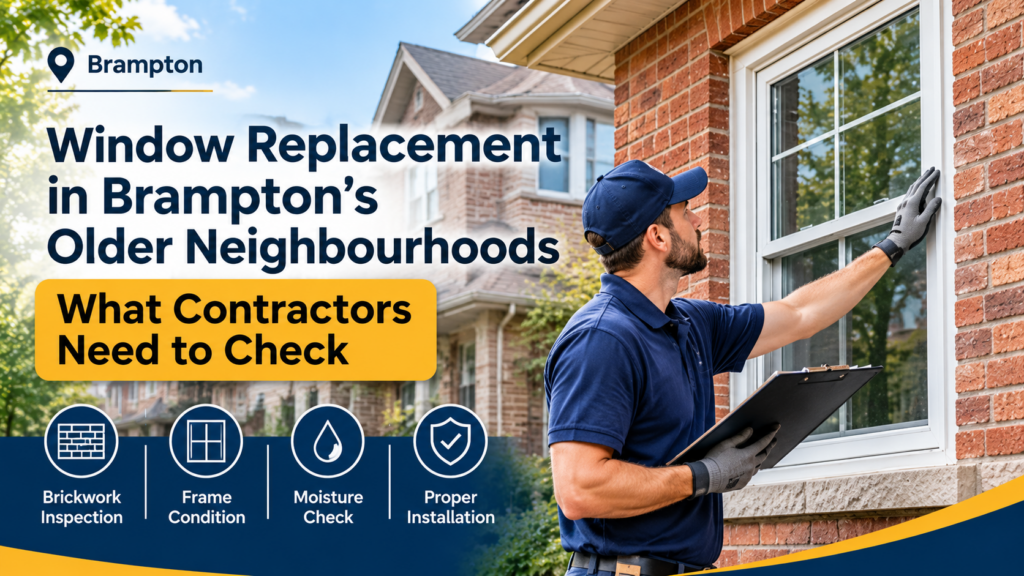
Replacing windows in an older Brampton home is not the same as replacing them in a newer build. Older properties often have different construction methods, frame materials, wall assemblies, and opening sizes. Picking a new frame and glass package is only part of the job.
A good contractor inspects the existing opening and the structure around it before recommending anything. That assessment helps prevent water intrusion, air leakage, installation problems, and surprise repair costs later. The key message of this guide is simple: every older home should be assessed on its own. If you want an overview of the options first, see our guide to choosing replacement windows for Brampton’s older neighbourhoods.
Inspecting the Existing Window Frames and Surrounding Structure
Frame deterioration
A contractor should look for cracks, warping, peeling finishes, and signs of material breakdown. Wooden frames need a check for soft spots, decay, and moisture damage. Older metal frames can corrode or have damaged components. The goal is to decide whether the existing frame can stay or needs to come out completely.
The surrounding wall
Inspect the interior wall around the window for staining, damaged drywall, deteriorating plaster, and signs of earlier leaks. Check whether the frame has separated from the wall, and note any gaps that point to poor sealing or an earlier installation problem.
Insert or full-frame replacement?
Insert replacement keeps the existing frame and fits a new window inside it. It can work well when the frame is sound. Full-frame replacement removes the old frame too, which helps when the frame is damaged or the opening needs correcting. The condition of the original opening usually decides which is right. Our post on the best window upgrades for older brick houses in Brampton covers this choice for brick homes.
Checking Brickwork, Masonry, and Exterior Openings
Brick around the window
Look for cracked, loose, or deteriorating bricks and mortar joints with gaps. Check the brick directly above and below the window as well. Any masonry repairs should be identified before installation, not after.
Opening dimensions
Measure the width, height, and depth of the opening, and check whether it is square, level, and plumb. Earlier repairs and construction changes can leave uneven dimensions, so contractors should not rely only on the size of the old window.
Brick mould and exterior finishing
Brick mould is the exterior trim around the window. Inspect it for damage, decide whether new trim or extra finishing is needed, and plan how the new window will blend with the existing exterior.
Looking for Hidden Moisture Damage and Water Intrusion
Moisture checks matter most before an old window comes out, because that is when hidden damage is easiest to find.
Signs of earlier leaks
- Water stains around the frame.
- Bubbling paint or damaged interior finishes.
- Soft or deteriorating wood.
- Discolouration near the sill.
- Musty odours or visible mould-like growth.
The sill and lower frame
Check that the sill slopes to send water outward, inspect the lower frame for deterioration, and look for signs of water collecting near the opening.
Exterior water management
Examine the flashing and existing sealant. Find any gaps where rain could get in, and decide whether the installation needs better drainage and water protection.
Important point: A contractor should find the source of moisture instead of covering damage with new trim or sealant. If you have noticed leaks or drafts already, our article on common window and door problems in Brampton homes may help you spot the cause.
Evaluating Insulation and Air Sealing
Air leakage
Check for drafts around the frame, old caulking and weatherstripping that has broken down, and gaps between the window and the wall opening.
Existing insulation
Look at whether the space around the frame is properly insulated, and whether insulation is missing, compressed, or deteriorated. Insulation should go in without interfering with how the window operates or drains.
Planning proper air sealing
Use suitable sealing materials and keep the seal continuous around the installation. Air sealing and exterior water management are two separate jobs, and both need to be done right.
Are the Openings Suitable for Modern Windows?
Irregular openings
Few older openings are perfectly square. Uneven sill and jamb surfaces affect installation, so measurements should be taken at several points.
Existing configuration
Identify the current window style and how it opens. Then check whether the opening can take your preferred replacement style, with enough clearance, ventilation, and access. If you are weighing styles, our comparison of single-hung vs. double-hung windows may help.
Installation compatibility
Confirm there is enough depth, review frame dimensions and exterior finishing needs, and make sure the selected window can be properly supported and sealed.
Selecting Window Materials for Older Brampton Homes
Vinyl
Vinyl is low-maintenance, resists moisture, and comes in many styles and colours. Frame dimensions affect how it looks in an older opening, so ask to see profiles.
Fibreglass
Fibreglass is dimensionally stable and resists expansion and contraction, making it a durable option to compare.
Wood and wood-clad
Wood suits traditional architecture but needs regular upkeep. Wood-clad windows combine a wood interior with a different exterior material. Our article on vinyl vs. wood windows for Brampton homes compares the two in more depth.
Key point: Material choice should reflect the home’s construction, appearance, maintenance expectations, and budget.
Reviewing Glass Options and Energy Performance
Double-pane and triple-pane
Triple-pane units add a third pane and insulating space, which also adds thickness and weight. The right choice depends on your home and budget. See triple-pane vs. double-pane windows for a closer look.
Low-E coatings
Low-E coatings help manage heat transfer and improve energy performance.
Gas-filled units
Argon between the panes can improve thermal performance in well-designed units.
Performance ratings
Look at U-factor, solar heat gain coefficient (SHGC), and ENERGY STAR certification. Compare the complete window, not one feature in isolation.
Structural Changes and Previous Renovations
Modified openings
Check for past enlargements or reductions, replacement materials around the opening, and whether the installation follows the original wall configuration.
Support above larger openings
Lintels support masonry above an opening. Look for visible cracking or signs of movement, and recommend further assessment if there is any concern.
Earlier repairs
Patched brickwork, replacement trim, and inconsistent frame sizes can affect the new installation. In some cases a specialist assessment is needed.
Important: Structural changes should not go ahead without the proper assessment and approvals.
Understanding Brampton Requirements Before You Start
Building permits
Requirements depend on the scope of work. A straightforward replacement can be treated differently from changing an opening or touching structural elements. Confirm what applies with the City of Brampton instead of assuming.
Egress and safety
Where bedroom windows serve as escape openings, a change to the configuration should not compromise that. Read the legal requirements for bedroom and basement windows for background.
Older building materials
Older homes can contain materials that need special handling. If you suspect hazardous materials, have them assessed before anything is disturbed.
Preparing the Home for Window Replacement
- Confirm final measurements and window specifications.
- Review access to interior and exterior work areas.
- Protect floors, furniture, landscaping, and nearby surfaces.
- Plan safe removal and disposal of the old windows.
- Discuss the installation schedule.
- Confirm whether extra repairs may be needed once the old frames are out.
- Explain how the home will be protected from weather during the work.
Our step-by-step guide on what to expect during a window replacement walks through installation day.
What to Ask Before Hiring a Window Replacement Contractor
- Will you inspect the existing frames and surrounding brickwork?
- Do you check for hidden moisture damage before installation?
- Will you recommend insert or full-frame replacement based on the opening’s condition?
- How do you handle insulation, flashing, and exterior sealing?
- Will you flag structural or permit concerns?
- What warranty covers the products and the installation?
- Will you explain any extra repair costs before going ahead?
Look for a contractor who explains the condition of what is already there, instead of offering the same solution for every home. Our guide to choosing the right window installer in Brampton has more questions to ask. If you are considering doing the work yourself, read DIY vs. professional window installation first, and for budgeting, see the cost of window and door installation in Brampton.
Conclusion: Proper Inspection Makes Older Home Window Replacement More Reliable
Checking the frames, brickwork, openings, insulation, and moisture conditions up front makes the whole project more dependable. Older homes call for careful measurements and installation planning, and fixing existing problems before the new windows go in helps prevent complications down the road.
Explore our window installation in Brampton and window replacement in Brampton services, check current specials, or see our full range of windows and doors Brampton homeowners choose. Planning an entry upgrade too? Our article on front door replacement in Brampton can help you match the new door to your brick and trim.
Planning window replacement for an older home in Brampton? Contact our team at +1 905-670-5925 to discuss your project, review your existing windows, and explore suitable replacement options. You can also reach us online. For more on choosing windows for your home’s exterior colours, see black windows vs. white windows, and browse more window and door tips on our blog.
Frequently Asked Questions
Do older homes in Brampton need special window replacement considerations?
Yes. Older homes may have uneven openings, deteriorated frames, aging brickwork, or previous modifications that require additional inspection before installation.
Can new windows be installed without removing the existing frame?
Sometimes. Insert replacement may be suitable when the existing frame is structurally sound and compatible with the new window. Damaged frames may require full-frame replacement.
Should contractors inspect brickwork before replacing windows?
Yes. Cracked bricks, deteriorated mortar, and damaged areas around the opening should be identified before installation begins.
How do contractors check for hidden water damage around windows?
They inspect visible staining, deteriorated wood, damaged interior finishes, sill conditions, and exterior water-management components. Further investigation may be necessary when damage is suspected.
Are modern windows suitable for older brick houses?
Yes. Modern windows can often be fitted to older brick homes, provided the openings are measured correctly and the installation is designed for the existing construction.
Do I need a permit to replace windows in Brampton?
Permit requirements depend on the work involved. Homeowners should confirm requirements with the City of Brampton, particularly when changing opening sizes or modifying structural components.
How long does window replacement take in an older home?
The timeline depends on the number of windows, installation method, opening conditions, and whether additional repairs are needed.