
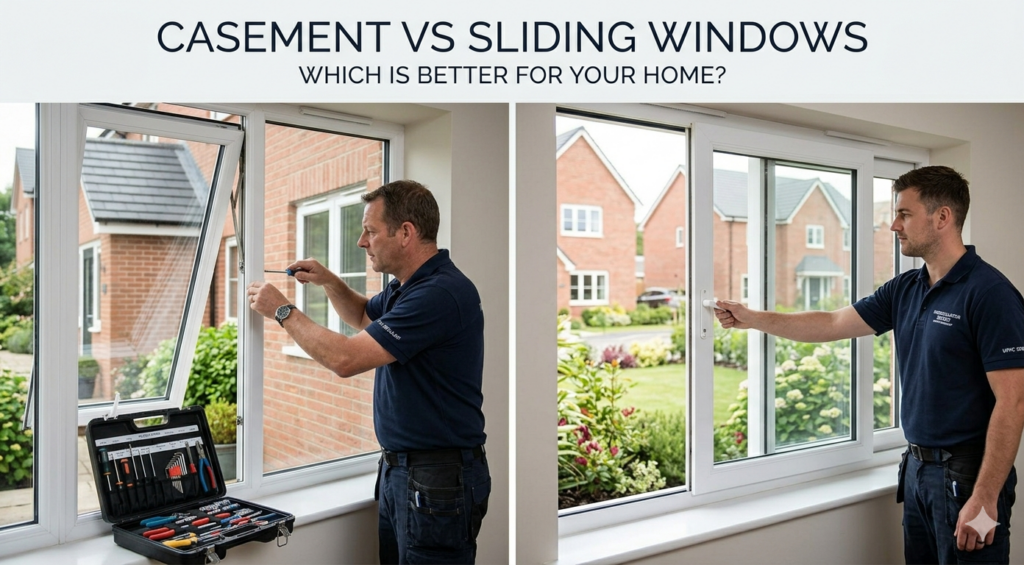
Choosing between casement and sliding windows might seem like a small design decision but in reality, it impacts everything from your home’s comfort to your energy bills and even resale value. Especially in a place like Brampton, where you deal with freezing winters and warm, humid summers, the right window choice can make a noticeable difference year-round.
If you’re planning a window replacement in Brampton or building from scratch, this detailed guide will walk you through every important factor—without the fluff.
What Are Casement Windows? (And Why They’re So Popular in Brampton)
Casement windows are attached to their frame by hinges on one side and open outward using a crank handle. Think of them like a door, but for your window opening.
What makes them stand out is how they function. When you open a casement window, the entire sash swings outward, allowing maximum airflow into your home. In fact, they act almost like a funnel—catching wind and directing it inside.
How They Perform in Real Life
In Brampton homes, casement windows are often installed in kitchens, bedrooms, and bathrooms—places where airflow matters the most. For example:
- In the kitchen, they help push out cooking heat and odors quickly
- In bedrooms, they improve fresh air circulation for better sleep
- In bathrooms, they reduce moisture buildup and mold risk
Build & Sealing Advantage
Casement windows press tightly against the frame when closed. This creates an airtight seal, which is extremely valuable during cold Canadian winters. That tight seal is one reason why many window contractors in Brampton recommend them for energy efficiency.
Things to Keep in Mind
- They need space outside to open (not ideal facing walkways or tight alleys)
- The crank mechanism can wear out after years (though high-quality hardware lasts long)
Single Hung vs Double Hung Windows: What Brampton Homeowners Should Choose
What Are Sliding Windows? (Simple, Practical, and Budget-Friendly)
Sliding windows operate on a horizontal track. Instead of swinging open, one panel slides over the other. Some models allow both panels to move, while others keep one fixed.
They’re one of the most commonly installed window types in modern Brampton homes—and for good reason.
Why Homeowners Like Sliding Windows
- No mechanical cranks—just slide and go
- Perfect for wide openings, especially in living rooms
- Ideal for tight outdoor spaces (no outward swing)
Real-Life Use Cases
Sliding windows are often used in:
- Living rooms with large wall openings
- Basement windows
- Areas facing patios or decks
They’re especially useful when you don’t want anything sticking out—like near a walkway or backyard seating area.
Maintenance Reality
Sliding windows are simple, but they do require regular track cleaning. Dust, debris, or ice buildup can make them harder to slide over time—something to consider in Brampton’s changing seasons.
Casement vs Sliding Windows: Deep Comparison That Actually Helps You Decide
1. Ventilation (Airflow Matters More Than You Think)
Casement windows open fully—meaning 100% of the window area is available for airflow. They also catch side breezes and direct them inside.
Sliding windows, on the other hand, only open halfway. That means less airflow, especially on still days.
👉 Real impact:
If your home feels stuffy in summer or lacks cross-ventilation, casement windows can noticeably improve comfort.
2. Energy Efficiency (Critical for Brampton Homes)
In cold climates like Brampton, insulation is everything. Casement windows close tightly and lock into place, creating a near airtight seal.
Sliding windows have small gaps along the track, which can allow slight air leakage over time.
👉 Real impact:
Casement windows can help reduce heating costs in winter and keep indoor temperatures stable.
3. Ease of Operation (Daily Convenience)
Sliding windows are effortless. There’s no mechanism—just slide them open.
Casement windows use a crank, which is great for hard-to-reach areas but can feel slower for everyday use.
👉 Real impact:
For elderly homeowners or frequent use, sliding windows are often more convenient.
4. Space & Placement Flexibility
Casement windows swing outward, so they need clearance outside. This can be an issue if:
- You have a narrow walkway
- There’s a fence or wall nearby
Sliding windows don’t require any extra space.
👉 Real impact:
For compact homes or tight exterior layouts in Brampton neighborhoods, sliding windows are more practical.
5. Maintenance & Durability
Casement:
- Moving parts (hinges, crank) may need occasional repair
Sliding:
- Tracks must be cleaned regularly
- Rollers may wear over time
👉 Real impact:
Sliding windows are simpler, but both types last long with proper care.
6. Security (Often Overlooked)
Casement windows are harder to break into because of their internal locking system.
Sliding windows can be lifted or forced open if not properly secured—but modern versions come with improved locks.
👉 Real impact:
If security is a concern, especially on ground floors, casement windows are the safer option.
7. Cost (Budget Planning for Brampton Projects)
Casement windows:
- Higher upfront cost
- More hardware involved
Sliding windows:
- More affordable
- Faster installation
👉 Real impact:
If you’re managing a window renovation budget in Brampton, sliding windows help reduce overall costs.
Pros and Cons of Casement Windows
Pros
- Superior ventilation (ideal for summer months)
- Excellent insulation (perfect for winter)
- Strong locking system for added security
- Clear, unobstructed outdoor views
Cons
- Higher initial investment
- Mechanical parts may need servicing
- Not suitable for tight exterior spaces
Pros and Cons of Sliding Windows
Pros
- Affordable and widely available
- Easy to operate for all age groups
- Perfect for wide openings and modern designs
- Space-saving—no swing needed
Cons
- Limited airflow compared to casement
- Lower energy efficiency
- Tracks require cleaning
- Security depends on lock quality
Best Window Type for Each Room
Choosing room-by-room can give you the best of both worlds.
- Kitchen:
Casement windows help remove heat, smoke, and odors quickly - Living Room:
Sliding windows maximize natural light and outdoor views - Bedroom:
Either works—casement for airflow, sliding for simplicity - Bathroom:
Casement windows improve ventilation and reduce humidity
👉 Pro Tip: Many Brampton window installation experts recommend mixing both styles across the home.
Explore best windows option : Top 10 Window Types for Homes in Brampton
What Should You Consider Before Making a Final Decision?
Before choosing, think beyond just style:
1. Your Home Layout
Do you have space outside for windows to open?
2. Climate Needs
Brampton winters demand better insulation—casement windows perform better here.
3. Budget
Sliding windows are more cost-effective if you’re upgrading multiple windows.
4. Maintenance Preference
Do you prefer mechanical systems or simple designs?
5. Long-Term Value
Energy-efficient windows can save money over time and increase home value.
Casement vs Sliding Windows: Comparison Table
| Feature | Casement Windows | Sliding Windows |
| Ventilation | Excellent | Moderate |
| Energy Efficiency | High | Medium |
| Ease of Use | Moderate | Easy |
| Space Needed | Requires space | Space-saving |
| Cost | Higher | Lower |
| Security | Strong | Moderate |
Final Verdict: What Actually Works Best for You?
Here’s the honest answer most contractors won’t tell you:
👉 There is no single “best” window—it depends on where and how you use it.
- Choose casement windows for better airflow, insulation, and security
- Choose sliding windows for affordability, simplicity, and tight spaces
👉 Smart homeowners in Brampton often combine both to get the best performance in every room.
Conclusion
Windows are a long-term investment. The right choice can improve your home’s comfort, reduce energy costs, and enhance its overall look.
If you’re planning a window replacement in Brampton, take time to evaluate your needs—or consult a local expert who understands the climate and housing styles.
FAQs
Are casement windows worth the extra cost?
Yes, especially if you value energy efficiency and ventilation in colder climates.
Do sliding windows leak air?
They can over time if not properly maintained, especially along the tracks.
Which window type lasts longer?
Both can last decades with proper care, but sliding windows have fewer mechanical parts.
Can I mix window styles in one home?
Absolutely—and it’s often the best approach for functionality and design.